
Cornerstone guide
The Best Roofing Materials for the Pacific Northwest (Ranked by Situation)
The short answer
For most PNW homes, architectural asphalt (Owens Corning Duration, GAF Timberline HDZ) wins on cost-per-year. Standing-seam metal wins in snow country, fire zones, and forever homes. Cedar is a character choice with a mandatory maintenance contract. Low-slope sections need real membrane. The right answer depends on your side of the Cascades and how long you're staying.
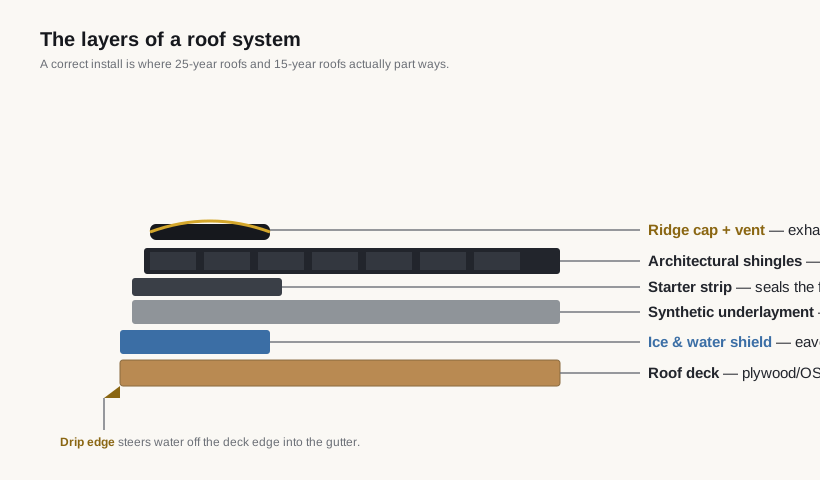 Illustration
Every material has a sales brochure. What homeowners actually need is a ranking by situation — because the right roof for a Everett craftsman is the wrong roof for a Mead rancher, and both are the wrong roof for a Eugene low-slope. Here’s the honest matrix, from the people who install all of them.
The quick matrix
| Material | Best for | PNW lifespan | Typical installed cost |
|---|---|---|---|
| Architectural asphalt | Most homes; selling within ~10 yrs | 20–25 yrs | $12,000–$28,000 |
| Standing-seam metal | Snow & fire country; forever homes | 50+ yrs | $25,000–$55,000 |
| Cedar shake | Character homes, maintenance accepted | 25–35 yrs (maintained) | $28,000–$60,000 |
| Composite shake | Cedar look, near-zero upkeep | 40–50 yrs | ~20–30% under cedar |
| Membrane (TPO/PVC) | Any slope under 2:12 | 20–30 yrs | $8,000–$20,000 |
The sections below explain each — and, just as important, when to skip it.
Architectural asphalt — the default for a reason
Best for: most homes, most budgets, anyone selling within ten years. PNW lifespan: 20–25 years installed correctly, 15–18 installed badly. Installed cost: $12,000–$28,000 for most full replacements.
Modern architectural shingles (Owens Corning Duration, GAF Timberline HDZ) are the value baseline: the lowest cost per year of service of anything on this list, wind-rated for the Sound corridor when fastened correctly, and available in algae-resistant formulations that matter west of the Cascades. The catch is that “installed correctly” carries most of the weight — ventilation, ice-and-water placement, and fastening pattern separate 25-year roofs from 15-year roofs far more than the shingle brand does. Full system details here.
Skip it if: your roof pitch is under 2:12 (that’s membrane territory), or you’re in a heavy-snow zone and planning to stay decades (metal’s math wins).
Standing-seam metal — the long bet
Best for: snow country (Spokane, Mead, foothills), fire-risk zones, forever homes, and anyone done thinking about roofs. PNW lifespan: 50+ years. Installed cost: $25,000–$55,000 — roughly double asphalt, lasting roughly triple.
Concealed-fastener standing seam sheds snow instead of stacking it, shrugs off freeze-thaw cycling, carries Class A fire ratings that matter more every summer east of the mountains, and holds Kynar finishes against UV for decades. East of the Cascades it’s frequently the rational choice, not the premium one. West-side buyers choose it for lifespan and looks; the snow argument doesn’t apply, but the never-reroof-again argument does. The full metal breakdown, including why we won’t install exposed-fastener panels on homes.
Skip it if: you’re selling within five to eight years — you’ll pay for decades you won’t use, and buyers rarely pay full credit for them.
Cedar shake — character with a contract
Best for: homes whose architecture genuinely calls for it, owned by people who accept the maintenance in writing. PNW lifespan: 25–35 years maintained — sometimes 12 unmaintained under fir canopy. Installed cost: $28,000–$60,000, plus $800–$1,500 in care every 3–5 years.
Nothing looks like real cedar, and nothing else farms moss like it either. In our climate cedar is a maintenance relationship, not a purchase — treatment cycles, airflow care, zinc strips, and honest acceptance that shaded planes will fail before sunny ones. Restricted in some fire zones east of the mountains. Modern composite shakes fake the look convincingly at 20–30% less with near-zero maintenance; we install both and tell you the whole truth first.
Membrane (TPO/PVC) — the only real answer for low-slope
Best for: any section pitched under 2:12 — additions, porch roofs, mid-century flats, small commercial. PNW lifespan: 20–30 years with drainage done right. Installed cost: $8,000–$20,000 for typical residential sections.
Shingles on a low-slope roof are a leak on a schedule — they shed water, they don’t hold it back. Heat-welded single-ply membrane with engineered drainage is the correct answer, full stop. Half the “flat roof problems” in the valley are actually shingle-on-low-slope problems wearing a disguise. Low-slope systems explained.
The two-question shortcut
- Which side of the Cascades? West: algae-resistant architectural asphalt is the default; moss management is your real material decision. East: take the metal conversation seriously — snow, fire, and UV all vote for it.
- How long are you staying? Under 10 years: asphalt, almost always. Forever home: run the metal math — we’ll do it with you, honestly, at a free inspection.
Prices reflect our 2026 WA/OR job files. For your roof’s actual numbers: the cost calculator gets you close in ten seconds, and the free inspection gets you a fixed bid.
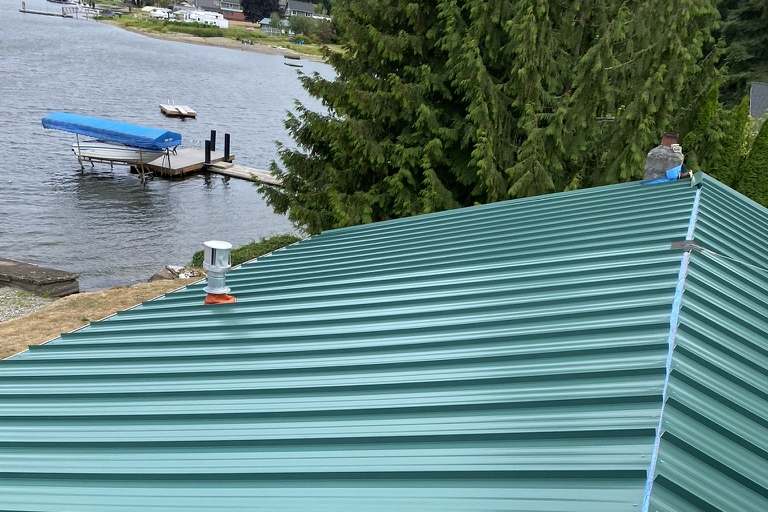 See it on a real jobIce Dam Problem Solved with Standing-Seam MetalSpokane, WA · A lake home in the Spokane area grew three-foot icicles every January and had ceiling staining in two rooms. Two previous contractors had quoted shingle replacements — treating the symptom, not the attic heat loss driving it.
Sources & methodology
- Owens Corning — Duration series shingle & wind-rating data
- GAF — Timberline HDZ product data & LayerLock technology
- UL 790 / ASTM E108 — roof-covering fire classification (Class A–C)
Insurance, permit and code details vary by policy and jurisdiction. This guide is general information from our field experience, not individualized professional advice.