
Maintenance & Lifespan
Attic Ventilation, Explained: Why PNW Roofs Die From the Inside
The short answer
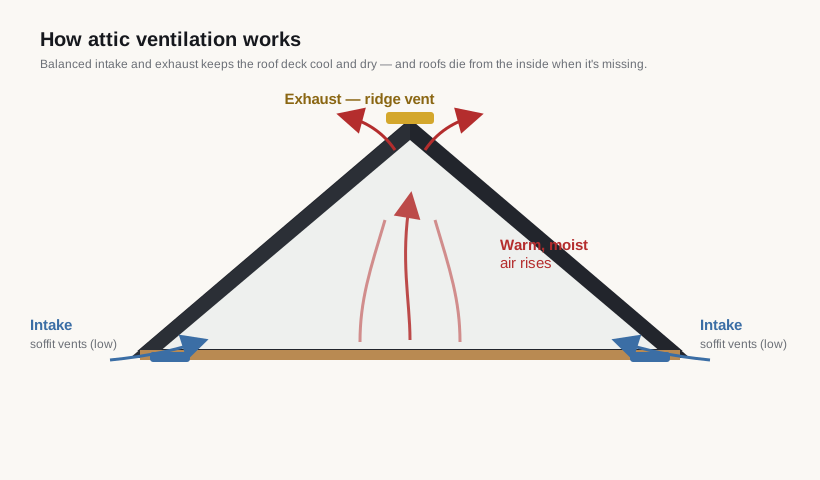
Your attic needs continuous intake at the soffits feeding continuous exhaust at the ridge — in balance. Under-vented PNW attics trap moisture that rots decking from below and heat that cooks shingles from beneath, halving roof life. Signs of trouble: musty attic smell, frost on nails in winter, ice dams, and upstairs rooms that roast in summer.
 Illustration
Part of our guide to The PNW Roof Maintenance Calendar: What to Do, When, and What It Buys You.
Two identical roofs, installed the same year with the same shingles, can die a decade apart — and the difference is almost always the attic under them. Ventilation is the least visible, least understood, and most consequential part of a Pacific Northwest roof. Here’s how it actually works.
The physics, in one paragraph
Air enters low (at the soffits under your eaves), warms slightly, rises along the underside of the roof deck, and exits high (at the ridge). That continuous wash of outside air does two jobs: it carries away moisture that migrates up from the living space, and it keeps the roof deck close to outdoor temperature. Break the flow — blocked soffits, no ridge exhaust, insulation stuffed into the eaves — and both jobs stop.
What failure looks like in our climate
West of the Cascades, the killer is moisture. A family of four pushes gallons of water vapor into the air daily; some of it always finds the attic. In a vented attic it leaves. In a choked attic it condenses on the cold underside of the sheathing all winter — and PNW decking rots from the inside while the shingles above still look serviceable. The tells: musty smell, dark staining on the sheathing, frost on nail tips during cold snaps, mold on the north-facing underside.
East of the mountains, add heat and ice. Summer: a sealed attic hits 140°F+ and bakes shingles from below — this is why boom-era roofs die at 15 instead of 25, and why manufacturer warranties require adequate ventilation. Winter: trapped heat melts the snowpack from beneath and builds the ice dams Spokane knows too well.
The signs you can check today
- Musty or damp smell at the attic hatch
- Upstairs rooms noticeably hotter than downstairs on summer evenings
- Icicles and ice dams every winter (east side)
- Moss or premature aging concentrated on one roof plane
- Soffit vents painted over, insulation-clogged, or simply absent (common on pre-1980 stock)
- Bath fans venting into the attic instead of through the roof — a rot machine we find weekly
What actually fixes it (and what doesn’t)
The fix is a balanced system: clear or add continuous soffit intake, install baffles so insulation can’t choke it, and match it to continuous ridge exhaust sized to the attic’s actual volume. Air-seal the ceiling plane first — can lights, top plates, the hatch — because insulation over air leaks just filters the escaping heat.
What doesn’t fix it: a couple of static louvers and hope; gable fans fighting the ridge vent; and powered attic fans, which frequently depressurize the attic enough to pull conditioned air out of the house — you pay the electric bill twice. Passive balance beats powered gadgets on physics and costs nothing to run.
The mixed-exhaust trap: ridge vents plus box vents plus a gable vent sounds like more ventilation. It’s usually less — exhausts short-circuit each other, pulling air vent-to-vent across the top of the attic while the deck below sits in still, wet air. One exhaust strategy, done fully, wins.
The money math
Ventilation correction runs $800–$2,500 standalone; bundled into a reroof it’s largely built into the system price. Against the cost of premature shingle failure (a decade of lost roof life on a $12,000–$28,000 asset) and rotted decking ($150+ per sheet to replace), balanced airflow is among the highest-ROI work on this site. It’s also the difference between a manufacturer’s extended warranty being real or void.
Not sure what’s happening up there? Our free inspections include the attic side — because half of what kills PNW roofs never shows from the street.
Sources & methodology
- Asphalt Roofing Manufacturers Association (ARMA) — attic ventilation
- International Residential Code R806 — roof ventilation requirements
Insurance, permit and code details vary by policy and jurisdiction. This guide is general information from our field experience, not individualized professional advice.