
Cornerstone guide
Planning a Full Exterior Renovation: The PNW Homeowner's Guide
The short answer
A full exterior renovation should be planned as one integrated project, not four separate ones. The correct sequence is roof first, then windows and doors integrated with the weather barrier, then siding over both, gutters last. Bundling saves 10–15% versus separate contractors and — critically — makes one company responsible for every seam where the systems meet.
Your home’s exterior isn’t four separate things — roof, siding, windows, gutters — that happen to sit near each other. It’s one continuous weather system, and it fails at the seams between those components far more than in the middle of any one. That single fact should shape how you plan a whole-home exterior renovation. Here’s the guide.
Why plan it as one project
When four different contractors handle four scopes on their own schedules, nobody owns the intersections — the roof-to-wall flashing, the window-to-housewrap seal, the gutter-to-drip-edge fit. Those intersections are exactly where water gets in and where warranties point fingers at each other. One contractor, one integrated plan means every seam is designed once and warrantied by one name.
It’s also cheaper: shared mobilization, shared tear-off logistics, and bundle pricing typically take 10–15% off versus buying the scopes separately.
The correct sequence
Order matters because each layer depends on the one before it:
- Roof first. Everything below depends on the roof shedding water correctly. It also generates the most debris — you don’t want it falling on new siding.
- Windows and doors next, integrated with the weather-resistive barrier (housewrap). Windows must be flashed into the water barrier, not just stuffed into holes and caulked.
- Siding over both, lapping correctly over window flashing and tying into the roof edge.
- Gutters last, fitted to the finished roof edge and drip edge, with drainage planned to carry water away from the new work.
Do it out of order — new siding before a roof tear-off, say — and you damage or compromise finished work.
What to fold in now — and what can wait
| Component | Typical PNW lifespan | Fold it in now if… |
|---|---|---|
| Roof | 20–25 yrs (asphalt) | Past ~15 yrs, or it feeds the wall you’re re-siding |
| Windows | 20–30 yrs | Failed seals, drafts, or they interrupt the new siding plane |
| Siding | 30–50 yrs (fiber cement) | Rot, failed paint, or trapped-moisture damage |
| Gutters | 20+ yrs | Undersized, leaking, or the roof edge is changing |
A good whole-envelope inspection grades each honestly — you don’t replace what still has years left.
What to assess before you start
- Grade every system honestly. Some may have years left. A good whole-envelope inspection tells you what genuinely needs doing now versus what can wait, so you’re not replacing serviceable components.
- Integration points. Where roof meets wall, where windows meet siding — these get designed deliberately, not improvised.
- Budget and phasing. You don’t have to do it all at once.
Phasing across seasons
A smart master plan can be executed over two or three seasons without losing the integration benefit: lock the design decisions and materials up front, then execute roof this year, siding and windows next. Done this way, phasing costs nothing extra in our pricing and spreads the investment. The key is that the plan is unified even if the timeline isn’t.
The payoff
One contract, one warranty, one project manager, one before-and-after that genuinely changes what your house is — and a building envelope engineered as the single system it actually is. That’s the case for planning it whole.
Considering a full exterior project? Book a free whole-envelope assessment — we’ll grade every system and build a phased master plan. See full exterior renovation.
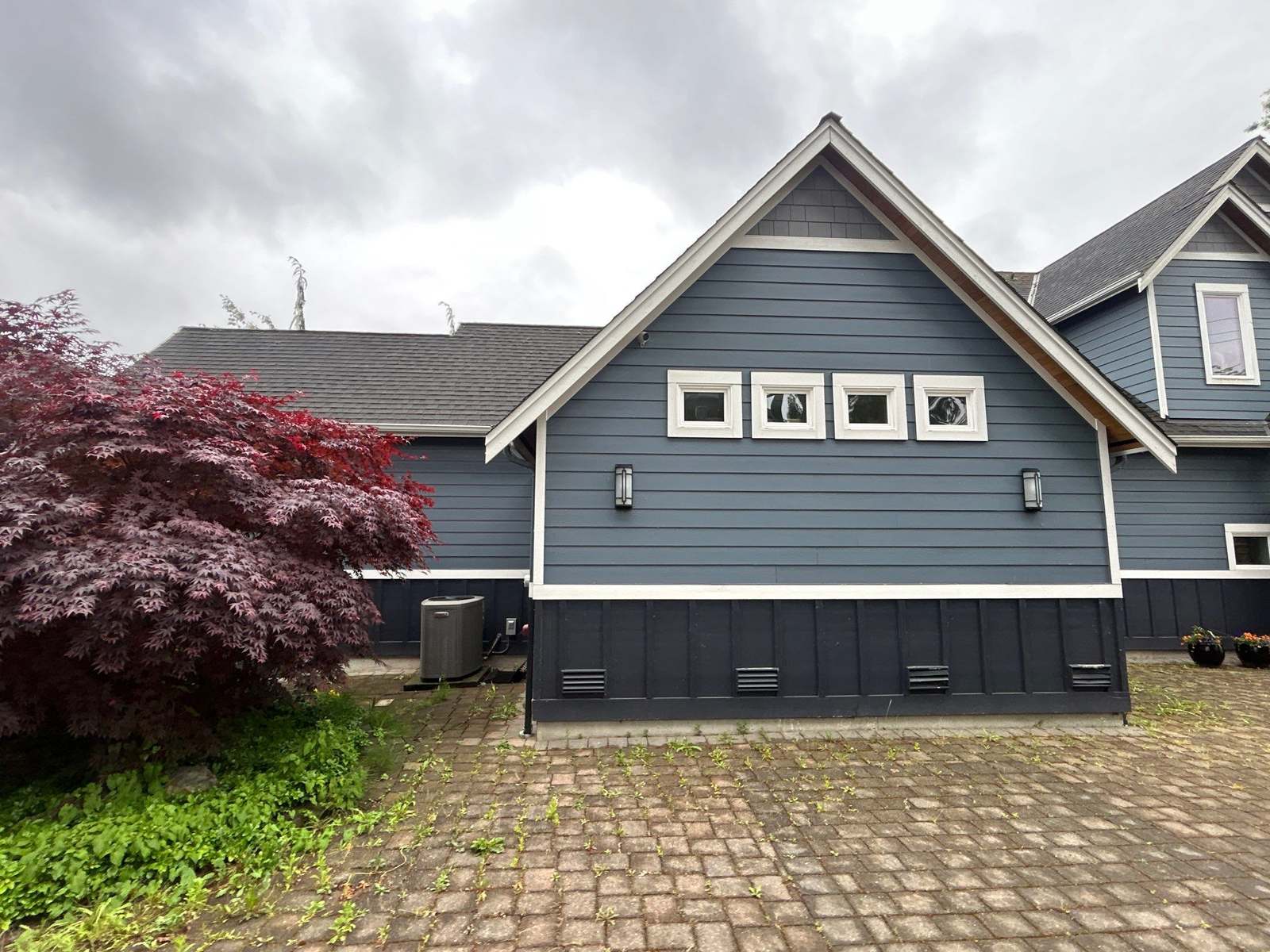 See it on a real jobBoom-Era Home Rewrapped in James HardieLake Stevens, WA · 2001-built two-story with failing LP-era composite siding: paint refusing to hold, soft spots below two window corners, and a woodpecker who had found all of them.
Sources & methodology
- International Residential Code R703 — exterior walls, flashing & weather-resistive barrier
- International Residential Code R903 — roof flashing & drainage
Insurance, permit and code details vary by policy and jurisdiction. This guide is general information from our field experience, not individualized professional advice.