
Cornerstone guide
What a Roof Replacement Actually Costs in Washington & Oregon (2026)
The short answer
Most full asphalt roof replacements in Washington and Oregon cost $12,000–$28,000 in 2026. Size, pitch, tear-off layers, decking condition, and material class set the price. Metal runs roughly double asphalt and lasts roughly triple. Financing typically starts around $180/month.
Nobody publishes real roofing prices, so homeowners walk into bids blind. Here are ours — the actual ranges from our own Washington and Oregon job files, and the honest explanation of what moves a number up or down.
What a new roof costs in 2026
Most full asphalt shingle replacements we complete land between $12,000 and $28,000. The middle of our bell curve is $16,000–$20,000 for a typical two-story home with one tear-off layer and architectural shingles.
Standing-seam metal typically runs $25,000–$55,000 — roughly double asphalt, lasting roughly triple as long.
Want your home’s range in ten seconds? Use the instant cost calculator — same math, no email gate.
What you get for the money, by material
Prices below are typical installed totals on an average-size WA/OR home from our 2026 job files. Large, steep, or complex roofs run higher — your measured bid is the real number.
| Material | Typical installed total | Expected lifespan | Best for |
|---|---|---|---|
| Architectural asphalt | $12,000–$22,000 | 25–30 yrs | Most homes — the value baseline |
| Designer / premium asphalt | $18,000–$30,000 | 30–40 yrs | Curb appeal, steeper or HOA roofs |
| Standing-seam metal | $25,000–$55,000 | 50+ yrs | Snow country, long-term owners |
| Synthetic (composite shake/slate) | $28,000–$50,000 | 40–50 yrs | Cedar/slate look, low upkeep |
| Cedar shake | $28,000–$45,000 | 25–35 yrs (maintained) | Historic and character homes |
Everything in those ranges assumes the same real scope: full tear-off, disposal, permits, new underlayment and flashing, and balanced ventilation. A bid that comes in far below the range is usually leaving one of those out — not finding magic.
What actually moves the price
Roof size and pitch. Roofers price in “squares” (100 sq ft). A steeper roof has more surface than its footprint suggests, takes longer, and requires more safety rigging. A walkable 4/12 pitch and a 10/12 alpine pitch on the same footprint can differ by 30% or more.
Tear-off layers. Code allows a maximum of two shingle layers, so if you have two now, tear-off is mandatory. Each existing layer adds labor and disposal cost.
Decking condition. The honest wildcard. Rot hides under shingles until tear-off day. What separates good contractors isn’t avoiding the surprise — it’s pricing it before the job: our bids print a per-sheet decking price so a surprise is never a negotiation.
Material class. Builder-grade three-tab shingles are cheapest and we generally won’t install them — the 20% savings costs 30% of the lifespan. Architectural shingles (Owens Corning Duration, GAF Timberline HDZ) are the value baseline. Designer shingles, cedar, and metal step up from there.
Access and complexity. Skylights, chimneys, dead valleys, multiple roof levels, and tight lot access all add real hours.
How this shifts across the region
Same materials, different priorities depending on which side of the mountains you’re on:
- Western Washington & Western Oregon (rain, moss). Constant damp makes ventilation and moss-resistant shingles worth the small upcharge — a cheap roof that traps moisture fails from the inside. Budget for algae-resistant (AR) shingles and proper intake/exhaust.
- Eastern Washington & the Inland Northwest (snow, UV, ice dams). Heavy snow load and freeze-thaw reward metal and full ice-and-water membrane at the eaves. UV is harder on shingles here than most homeowners expect — darker colors age faster.
- Central & Eastern Oregon and North Idaho (snow, freeze-thaw, wildfire). Snow retention matters on metal, and in wildfire-exposed areas a Class A fire rating and ember-resistant details can affect both material choice and, sometimes, insurability. Confirm local requirements with your building department.
What should never move the price
How much you seem able to pay. Whether you got other bids. Whether it’s storm season. A fixed, line-item, written bid is the minimum standard — if a contractor’s number moves during a hard-sell kitchen-table session (“if you sign tonight…”), you’ve learned what their first number was worth.
How to compare two bids that are $6,000 apart
Ask the cheaper one three questions:
- Is full tear-off included, or is this a layover? Layovers hide decking rot and void most manufacturer warranties.
- Who swings the hammers? Employee crews with workers’ comp, or whoever answered a text this week? Ask for the L&I / CCB numbers and look them up — Washington’s verify tool and Oregon’s CCB search are public.
- What does your warranty cover in year six? One-year workmanship coverage is a coupon, not a warranty. Ours is a written workmanship warranty on the installation itself.
If the cheap bid survives all three questions, take it seriously. It usually doesn’t survive the second one. For the full breakdown, see how to compare roofing bids.
Will insurance pay for any of this?
Only if the roof was damaged by a covered peril — wind, hail, falling trees. Age and wear are never covered. If a storm preceded your problems, read our insurance claims guide before you file anything; the order of operations matters.
The financing math
Most lenders we work with land qualified homeowners around $180–$320/month for a typical asphalt replacement. The comparison that matters: an actively leaking roof compounds damage into insulation, framing, and drywall at a rate that generally outruns interest.
For your actual number: a free inspection with a photo report — no pressure, no obligation.
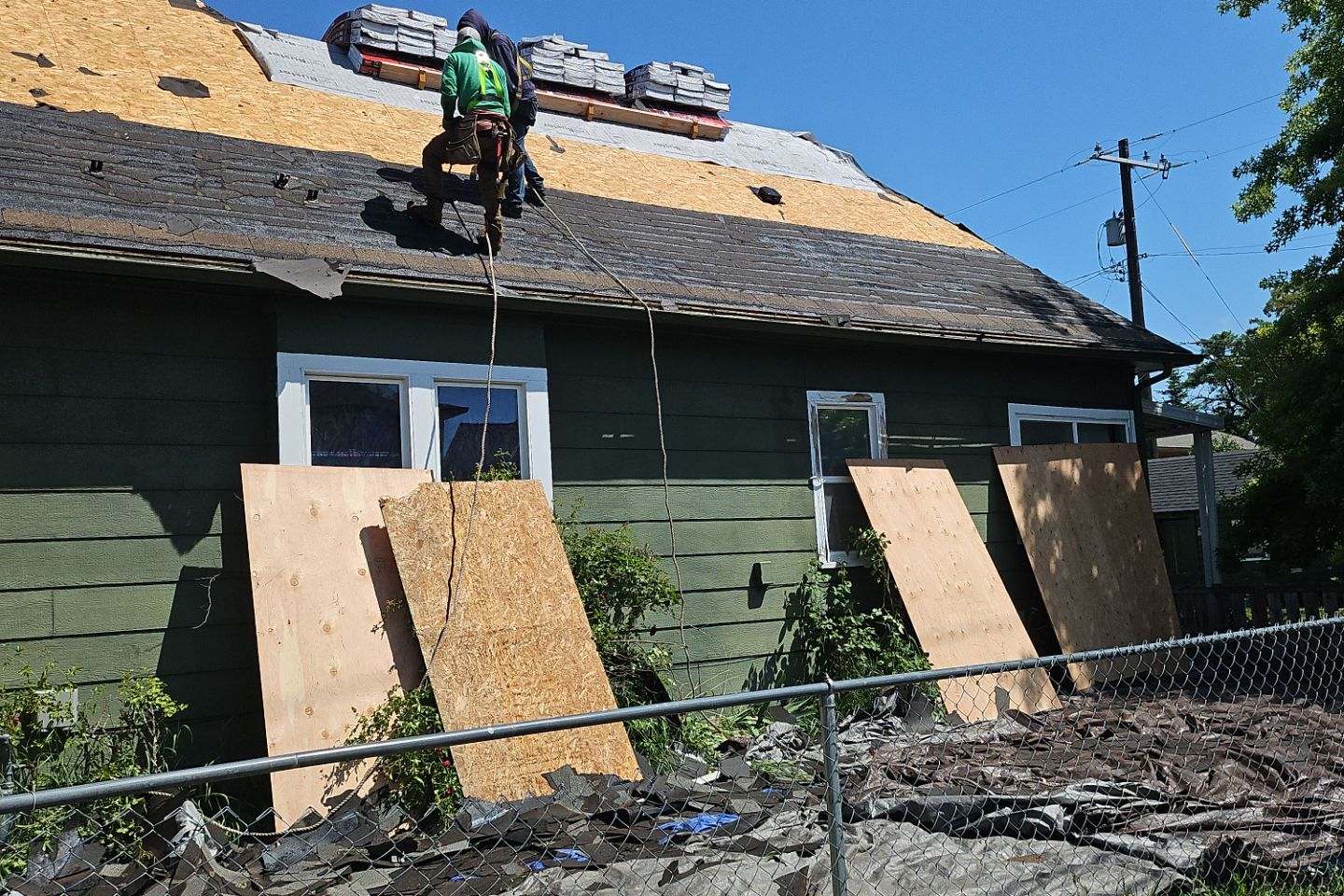 See it on a real jobStorm-Stripped Roof Rebuilt, Insurance Claim HandledSpokane, WA · A windstorm tore into this Spokane home hard enough to take the roof down to the decking. The homeowner's first call was to their insurance carrier — their second was to us.
Sources & methodology
- Washington State L&I — verify a contractor's license, bond & insurance
- Oregon Construction Contractors Board (CCB) — license search
- International Residential Code R908 — roof-covering replacement & two-layer limit
Insurance, permit and code details vary by policy and jurisdiction. This guide is general information from our field experience, not individualized professional advice.