Materials & Systems
Metal Roofing in Snow Country: Why It Wins East of the Cascades
The short answer
In snow country, metal roofing sheds snow instead of letting it stack, resists the freeze-thaw cycling that fatigues other materials, and carries Class A fire ratings that matter east of the Cascades. The one detail that makes it work safely: engineered snow retention, sized per roof plane, so shedding snow doesn't land on walkways, decks, or gas meters.
Part of our guide to The Best Roofing Materials for the Pacific Northwest (Ranked by Situation).
West of the Cascades, metal roofing is mostly an aesthetic and longevity choice. East of them — Spokane, the foothills, the real-winter towns — it’s often the rational choice. Here’s why snow country changes the math.
Snow sheds instead of stacking
An asphalt or shake roof holds a snowpack in place, which means your roof structure carries the full accumulated load through the winter — and that load melts from below (ice dams) and refreezes at the eaves. A smooth metal roof, correctly pitched, sheds snow in controlled slides. Less standing load, less meltwater working under the covering, fewer ice dams.
Freeze-thaw doesn’t fatigue it
Eastern Washington cycles above and below freezing constantly through winter. Every cycle expands and contracts roofing materials; asphalt gets brittle and cracks over years of it. Metal, properly detailed with expansion allowance, simply doesn’t fatigue the same way. It’s a big reason metal routinely outlasts its 50-year rating in these climates.
Class A fire rating
Every summer, the wildfire conversation gets more serious east of the mountains. Standing-seam metal assemblies carry Class A fire ratings — the highest — and don’t provide the combustible surface that shakes and some other materials do. In fire-risk zones, that rating is worth real money on insurance and real peace of mind.
The detail that makes it safe: snow retention
Here’s what a cheap metal install gets wrong: if snow sheds uncontrolled, it lands on whatever’s below — your deck, your walkway, your gutters, your gas meter, occasionally a person. The fix is engineered snow retention: rail or fence systems sized to each roof plane’s load and pitch, so snow releases where and how you want it. This isn’t optional in snow country; it’s the difference between a metal roof that’s an asset and one that’s a hazard. We engineer it per plane on every snow-country install.
The honest cost conversation
Metal runs roughly double asphalt upfront and triple its lifespan. In snow country, add the avoided ice-dam damage, the fire-rating insurance benefit, and the freeze-thaw durability, and the payback comes faster than it does on the west side. If you’re staying in a Spokane-area or foothill home for the long haul, ask us to run the metal numbers seriously.
See the full metal roofing service, or book a free inspection and we’ll run metal-versus-asphalt for your specific home and snow load.
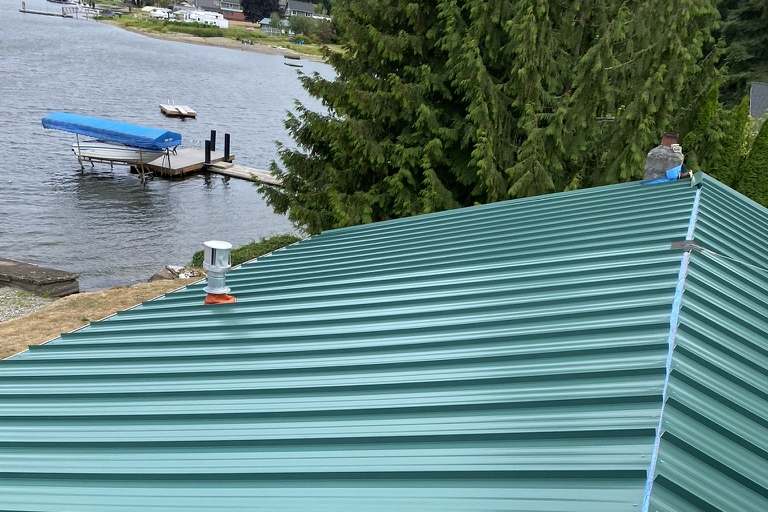 See it on a real jobIce Dam Problem Solved with Standing-Seam MetalSpokane, WA · A lake home in the Spokane area grew three-foot icicles every January and had ceiling staining in two rooms. Two previous contractors had quoted shingle replacements — treating the symptom, not the attic heat loss driving it.