
Cornerstone guide
Will Insurance Pay for My Roof? A WA & OR Homeowner's Guide
The short answer
Homeowner's insurance pays for roof damage from sudden covered perils — wind, hail, falling trees — not for age or wear. If a storm damaged your roof, you likely have a claim; if it's just old, you don't. Get an independent inspection before filing, because a denied claim still goes on your record.
It’s the first question every homeowner asks when a roof problem appears: will insurance cover this? The honest answer is “it depends entirely on why the roof failed” — and knowing the difference before you call your carrier can save your claim, your deductible, and your premium.
The rule that decides everything: peril vs. wear
Homeowner’s policies cover sudden, accidental damage from a covered peril. For roofs, that means:
- Wind — lifted, creased, or missing shingles after a storm
- Hail — bruising and granule loss from an impact event
- Falling objects — a tree or limb through the roof
- Fire, and weight of ice or snow in some policies
Policies never cover wear and tear: age, sun damage, moss, poor maintenance, or a roof that simply reached the end of its life. This is the line adjusters are trained to find, and it’s why a 22-year-old roof that starts leaking is almost never a claim, while a 6-year-old roof stripped by a windstorm almost always is.
| Usually covered (sudden peril) | Not covered (wear & maintenance) |
|---|---|
| Wind-lifted, creased, or missing shingles | Age and general end-of-life wear |
| Hail bruising and impact granule loss | Sun / UV degradation over time |
| Tree or limb strike through the roof | Moss, algae, and neglected maintenance |
| Weight of ice or snow (some policies) | Manufacturing defects (that’s a product warranty) |
Most real situations are a mix — an aging roof that a storm pushed over the edge — which is exactly why the inspection comes first.
The right order of operations
Do these in order. Skipping straight to step 3 is the most common and costly mistake.
- Document immediately. After any storm, photograph everything from the ground — shingles in the yard, interior stains, the fallen limb. Wind damage can reseal and hide within days.
- Get an independent inspection. A free inspection with an adjuster-formatted photo report tells you whether the damage is peril or wear — before you involve your carrier. Now you know if you even have a claim.
- Then decide about filing. A $900 repair against a $2,500 deductible is not a claim. Significant storm damage with interior exposure absolutely is.
Why order matters: a filed claim goes on your CLUE report whether it’s paid or denied, and a frivolous or denied claim can affect your rates and future insurability. You want to file when you know you’ll win.
The deductible truth
Your deductible is your share of the loss, by law and by contract. Any contractor who offers to “eat,” “waive,” or “absorb” your deductible is proposing insurance fraud with your name on the paperwork — and it’s the single clearest sign of a storm-chaser you should send away.
Will filing raise my rates?
Weather claims are generally rated across regions, not charged to you individually the way an at-fault auto claim would be — one wind or hail claim rarely moves your premium meaningfully. What does hurt is a pattern of claims or a denied claim on your record. Again: this is why we inspect before you file.
How we help — at no extra cost
If the damage is claim-worthy, we document it in adjuster-ready format, meet your adjuster on the roof, and work from the approved scope. You pay your deductible; we handle the rest. We don’t charge extra for insurance work — we build from the carrier’s scope, full stop.
Storm damage you think might be covered? Book a free inspection — we’ll tell you honestly whether you have a claim before you ever call your carrier.
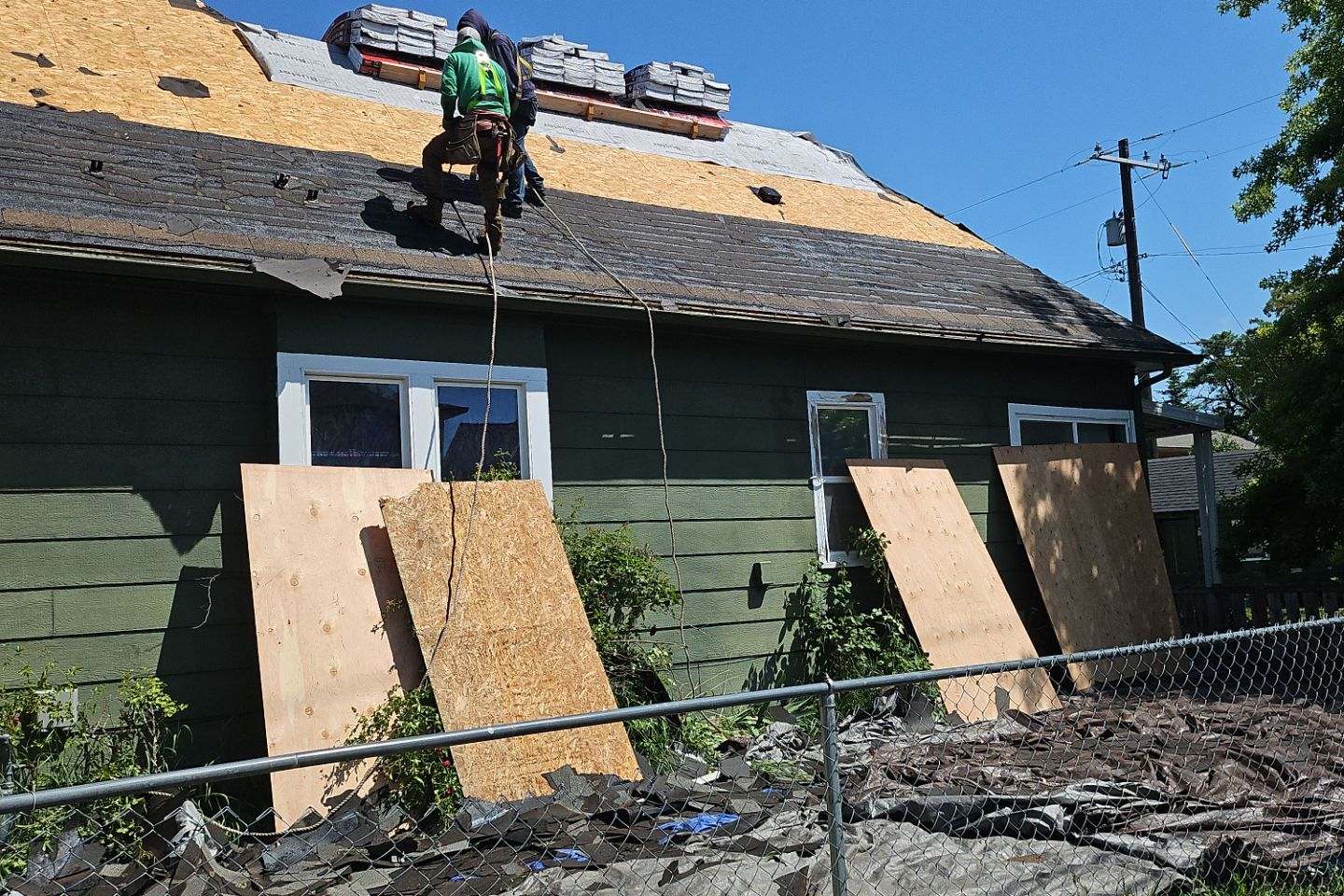 See it on a real jobStorm-Stripped Roof Rebuilt, Insurance Claim HandledSpokane, WA · A windstorm tore into this Spokane home hard enough to take the roof down to the decking. The homeowner's first call was to their insurance carrier — their second was to us.
Sources & methodology
- Washington State Office of the Insurance Commissioner — home insurance basics
- Oregon Division of Financial Regulation — homeowner coverage & claims
- National Association of Insurance Commissioners (NAIC) — understanding your policy
Insurance, permit and code details vary by policy and jurisdiction. This guide is general information from our field experience, not individualized professional advice.