
Storm & Emergency
Emergency Roof Leak: What to Do Before the Roofer Arrives
The short answer
For an active roof leak: move valuables and contain the water first, then relieve a bulging ceiling by draining it at the edge into a bucket. Find the entry point from inside the attic, not the roof — never climb a wet roof. Photograph everything for insurance, and call for emergency tarping, which most policies cover.
Part of our guide to The Pacific Northwest Storm Damage Playbook: What to Do in the First 48 Hours.
A roof leak in the middle of a Northwest storm is stressful, but the next hour is very manageable if you work in the right order. Here’s the calm version — protect the house, find the source safely, and set up a clean insurance claim — without ever getting on the roof.
First: safety and containment
- Kill power to the affected area if water is near light fixtures, outlets, or the electrical panel. Water and electricity is the one hazard here worth real caution.
- Move what you can. Get electronics, furniture, and anything irreplaceable out from under the leak path.
- Contain the water. Buckets and towels, and lay down a tarp or plastic to protect flooring. A second bucket ready to swap saves a lot of mopping.
If the ceiling is bulging
Trapped water pooling above drywall is the one thing to address immediately. Put a bucket underneath, then puncture a small hole at the lowest point of the bulge with a screwdriver and let it drain in a controlled stream. A sagging ceiling can hold gallons — a controlled release beats a sudden collapse. Stay out from directly beneath it.
Find the source — from inside
Water rarely enters where it drips. It travels along the underside of the deck, down a rafter, across a ceiling, and shows up feet away from the actual hole. Go into the attic with a flashlight (if it’s safe and dry to access) and trace the wet path uphill to where it starts — around a chimney, a plumbing vent, a skylight, a valley, or a nail. Mark it, photograph it, and put a bucket under the drip inside the attic to keep it out of the ceiling.
Do not go on the roof. Storm-loosened shingles and wet moss are exactly how homeowners get hurt. There is nothing you can safely do up there in a storm that can’t wait for a professional.
Document everything for insurance
Before anything is cleaned up or repaired, photograph it all: the interior damage, the water path, the ceiling, any storm debris outside, and the source if you found it in the attic. Time-stamped phone photos are ideal evidence. If a storm caused it, this is the start of a potential claim — read our storm-damage playbook and will insurance pay for my roof? before you file, because the order of operations matters.
Call for emergency stabilization
A reputable local contractor will tarp the roof and document the damage professionally while doing it. Emergency mitigation is almost always covered by your policy, and doing it promptly protects both your home and your claim — insurers can reduce a payout if you let preventable damage continue. Keep every receipt.
What not to do
- Don’t get on the roof.
- Don’t sign an assignment of benefits or a “we’ll handle your claim” contract with anyone who shows up unsolicited during a storm — here’s why.
- Don’t tear out wet drywall or insulation until it’s photographed.
- Don’t assume it’s a full replacement. Many leaks are a flashing or boot repair; get it diagnosed before you decide.
Active leak right now? Call our 24/7 line: 360-404-7835. If it’s contained and can wait for daylight, book an inspection and we’ll trace it, document it, and tell you honestly whether it’s a repair or something bigger.
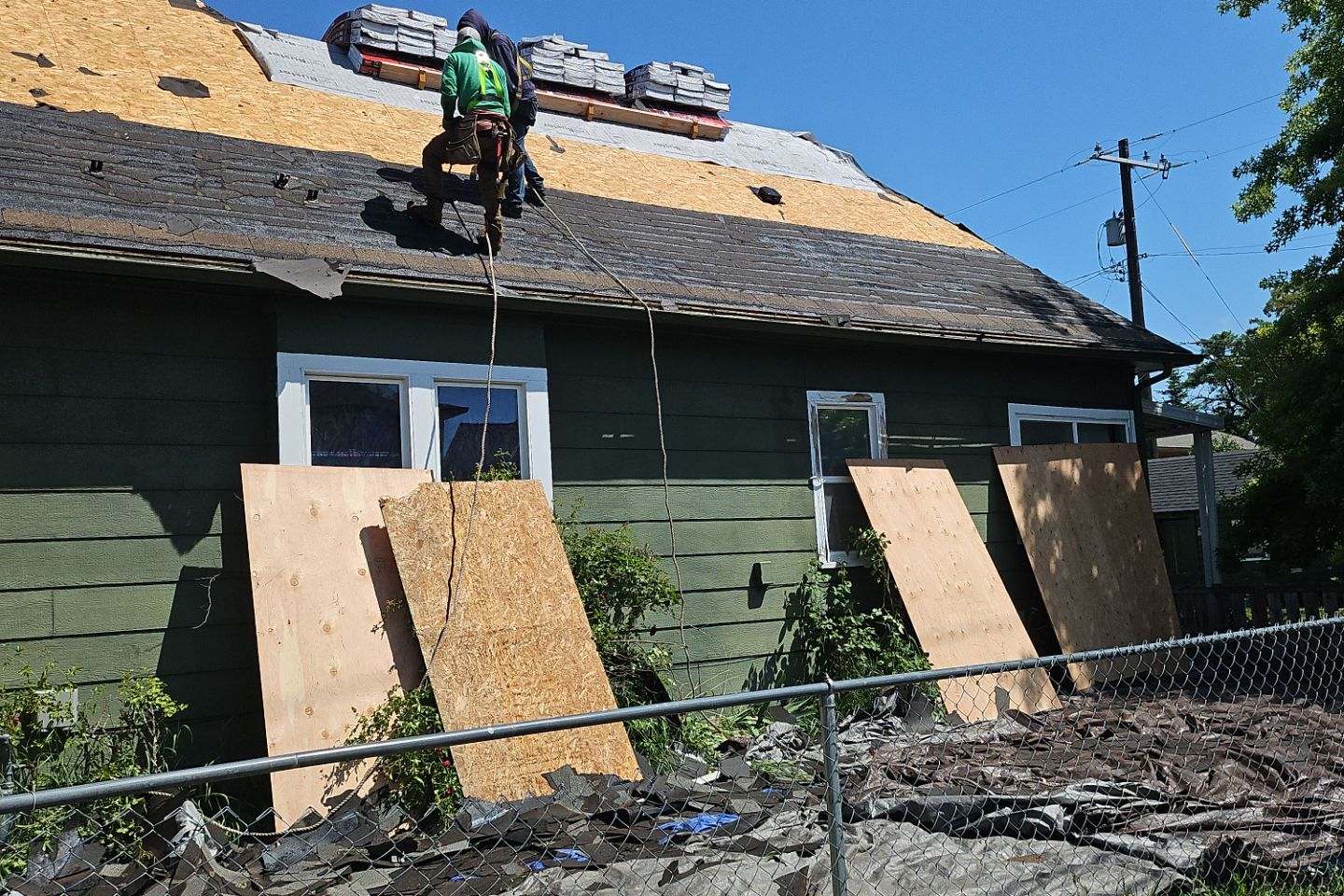 See it on a real jobStorm-Stripped Roof Rebuilt, Insurance Claim HandledSpokane, WA · A windstorm tore into this Spokane home hard enough to take the roof down to the decking. The homeowner's first call was to their insurance carrier — their second was to us.