
Maintenance & Lifespan
Why Roofs Leak Around Chimneys, Skylights, Valleys & Walls
The short answer
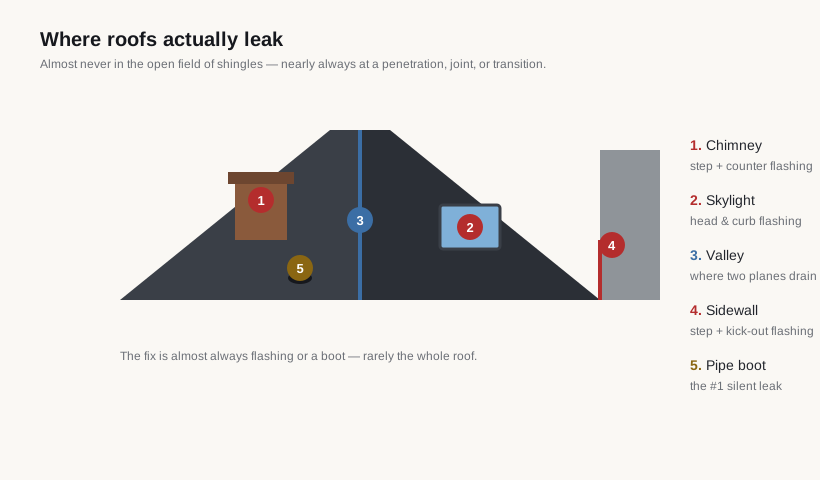
Roofs rarely leak through the field of shingles — they leak at flashing: chimneys, skylights, valleys, sidewalls, and plumbing-vent boots. In the PNW, cracked pipe boots and failed step flashing are the most common culprits. Because the failure is at a detail, the fix is usually a targeted repair, not a full replacement.
 Illustration
Part of our guide to The PNW Roof Maintenance Calendar: What to Do, When, and What It Buys You.
Homeowners picture a roof leak as water coming through the shingles. It almost never is. A field of properly installed shingles is a very good barrier; water gets in where that barrier is interrupted — a pipe, a chimney, a skylight, a valley, a wall. Nail down where roofs actually leak and two useful things follow: you’ll know what you’re looking at, and you’ll know it’s probably a repair, not a replacement.
The five usual suspects
1. Chimneys. A chimney needs two layers of flashing — step flashing woven into the shingle courses and counter flashing let into the masonry above it. When either fails, or when someone “fixed” it with a bead of tar, water tracks down the chimney and into the ceiling below. Chimneys are the highest-drama leak because the water travels far before it shows.
2. Skylights. Skylights leak at the head (top) and along the curb when the factory flashing kit is missing, reused, or improperly lapped. An aging skylight during a reroof is almost always worth replacing while the roof is open — the labor is already there.
3. Valleys. Where two roof planes meet, all their water converges. Debris dams, worn valley metal, or a sloppy shingle weave turn the busiest drainage path on the roof into the leakiest. Keeping valleys clear is half the battle.
4. Sidewalls. Where a roof plane meets a wall, step flashing carries water out onto the shingles — and a kick-out flashing at the bottom throws it into the gutter instead of behind the siding. Missing kick-outs are a classic builder shortcut that rots wall sheathing invisibly for years.
5. Plumbing-vent boots. The rubber gasket around each plumbing vent is the shortest-lived part of your roof — it hardens and cracks in UV and freeze-thaw, often within 10–15 years. It’s the number-one silent leak we find, and one of the cheapest to fix.
Why the field of shingles is rarely the problem
Shingles shed water by overlapping; there’s no single point for water to sit and soak. So unless shingles are physically missing (wind), cracked (age), or installed on too shallow a slope, the open field holds. That’s why “I have a leak” and “I need a new roof” are different sentences — and why anyone quoting a full replacement for a single leak owes you an explanation. If you’re weighing it, run the repair-or-replace assistant.
The PNW angle
Our climate is hard on the exact materials that fail: UV and freeze-thaw crack pipe boots, constant damp rots the wall sheathing behind a missing kick-out, and needle debris dams valleys. None of it is exotic — it’s why a twice-a-year maintenance rhythm and periodic flashing checks catch most leaks before they reach drywall.
Have a leak or a suspicious stain? Don’t climb up to find it. Book a free inspection — we’ll trace it to the source, photograph it, and tell you honestly whether it’s a $300 boot or something more. If it’s actively pouring in, read the emergency leak steps first.