
Materials & Systems
Every Layer of a Roofing System, Explained
The short answer
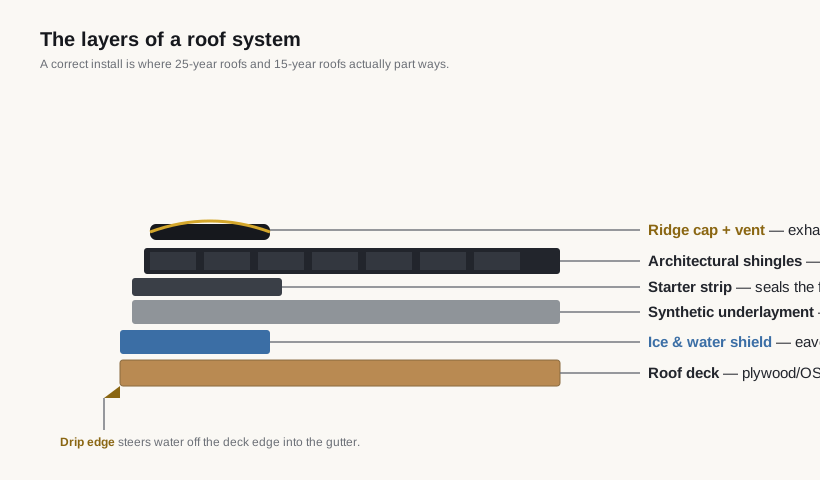
A roofing system, from the deck up: roof deck (structure), ice-and-water shield (eaves/valleys), synthetic underlayment (backup barrier), drip edge and starter (edge sealing), flashing (penetrations and transitions), field shingles (the visible layer), and ridge cap plus ventilation. The invisible layers — underlayment, flashing, ventilation — are where roofs actually succeed or fail.
 Illustration
Part of our guide to The Best Roofing Materials for the Pacific Northwest (Ranked by Situation).
Ask most homeowners what their roof is made of and they’ll say “shingles.” Shingles are the layer you see, but they’re one part of a system — and the parts you can’t see are the ones that decide whether the shingles reach their rated life or fail early. Here’s the whole stack, from the deck up.
From the deck up
1. Roof deck. The structural sheathing — plywood or OSB — nailed to your rafters or trusses. Everything else fastens to it, and it has to be dry and solid. When it rots, nothing above it can be trusted.
2. Ice-and-water shield. A self-sealing membrane at the eaves and in the valleys — the spots where wind-driven rain and ice-dam backup attack. It seals around the nails driven through it. Non-negotiable in our climate.
3. Synthetic underlayment. A water-resistant layer rolled across the entire deck, over the ice-and-water. It’s the backup barrier: if anything gets past the shingles, the underlayment still keeps the deck dry. Modern synthetic replaced old felt paper because it’s tougher and doesn’t wrinkle.
4. Drip edge. Metal edging at the eaves and rakes that directs water off the deck and into the gutter instead of behind it. Small part, big job — it’s what keeps your fascia from rotting.
5. Starter strip. A manufactured first course that seals the bottom edge of the field shingles against wind uplift. Some cut corners here by using flipped-around field shingles; it’s not the same.
6. Flashing. The metal that seals every interruption in the roof — chimneys, walls, valleys, and pipe boots. This is where roofs actually leak, so new (not reused) flashing is one of the most important lines on any bid.
7. Field shingles. The visible roof — architectural asphalt, metal, cedar, or synthetic. This is the layer everyone shops for, and the one that matters least to whether the roof leaks. Material choice is about looks and lifespan; the layers below are about staying dry.
8. Ridge cap & ventilation. Manufactured caps seal the peak, and the ridge vent exhausts the attic air that would otherwise cook and rot the roof from below. The system breathes here.
Why the invisible layers win or lose
Notice the pattern: the layers homeowners shop for (shingles) sit on top of the layers that actually determine the outcome (underlayment, flashing, ventilation). A premium shingle over reused flashing and a choked attic fails early. A mid-tier shingle over a correct system reaches its full life. This is the entire reason we tell people to scrutinize the installer harder than the shingle — the installer controls the layers you’ll never see.
What this means for your bid
A trustworthy bid names every layer: full tear-off, ice-and-water, synthetic underlayment, drip edge, starter, new flashing, the shingle line, ridge cap, and ventilation. A vague bid that just says “new roof” and a price is hiding which layers it’s actually installing — see what’s included in a replacement.
Want to see your roof’s system, layer by layer? Book a free inspection — we’ll show you what’s there now, what’s missing, and what a correct system looks like on your home.