Materials & Systems
Fire-Resistant Roofing for Eastern Washington & North Idaho
The short answer
In wildfire country east of the Cascades, aim for a Class A fire-rated roof assembly — the highest rating. Metal, tile, and many asphalt and synthetic products can achieve it. But the material is only half the story: embers get in through vents, gaps, and debris, so ember-resistant details and a clean roof matter as much as the rating on the box.
Part of our guide to The Best Roofing Materials for the Pacific Northwest (Ranked by Situation).
West of the Cascades, wildfire is a background worry. East of them — Spokane, the Columbia Basin, the Idaho panhandle — it’s an annual reality, and your roof is the largest, most exposed, most ember-vulnerable surface on the house. Choosing for fire here isn’t paranoia; it’s the same practical calculus as choosing for snow. Here’s what actually matters.
Class A is the target
Roof coverings are fire-rated Class A, B, or C under the UL 790 / ASTM E108 standard, with Class A the highest — it resists severe flame exposure and burning brands. In wildfire-exposed areas, a Class A assembly is the goal. The good news: you have options.
| Material | Fire performance | Also good for here |
|---|---|---|
| Standing-seam metal | Non-combustible; Class A assemblies | Snow shedding, freeze-thaw, 50+ yr life |
| Concrete / clay tile | Non-combustible; Class A | Longevity; heavier structure needed |
| Class A asphalt shingles | Class A as a rated assembly | Cost; the value baseline |
| Synthetic (composite) | Many Class A options | Cedar look without the fire risk |
| Natural cedar shake | Combustible; often restricted | Generally the wrong choice in fire zones |
Cedar is the notable exception — untreated wood shakes are combustible and are restricted in many fire-prone jurisdictions east of the mountains. It’s a case where the material that looks the part is the one to avoid, and synthetic shake gets you the look safely.
The material is only half of it
Here’s what most homeowners miss: in a wildfire, homes usually ignite from wind-blown embers, not a direct wall of flame. Embers travel far ahead of a fire and hunt for weak points — and several of them are on and around your roof:
- Vents. Unscreened or coarse-screened attic and soffit vents inhale embers straight into the attic. Ember-resistant vents (fine mesh or rated products) close that door.
- Gutters and valleys full of debris. A gutter packed with dry fir needles is kindling bolted to your fascia. Keeping valleys and gutters clean is free fire hardening.
- Roof-to-wall and roof edges. Gaps at the eaves and transitions give embers a place to lodge. Tight, rated detailing matters.
A Class A roof over unscreened vents and needle-choked gutters is doing half its job. The assembly and the maintenance work together.
The Inland Northwest bonus
The materials that resist fire best here — metal especially — are also the ones that handle snow and freeze-thaw best. East of the Cascades you’re often solving for fire, snow, UV, and longevity at once, and a standing-seam metal assembly answers all four. That’s a big part of why metal is frequently the rational choice, not the premium one, in Spokane and the panhandle.
Before you decide
Fire requirements and insurance implications vary by jurisdiction and carrier, so confirm specifics with your local building department and insurer. But the general direction is clear: a Class A assembly plus ember-resistant details plus a clean roof is the resilient position.
In a wildfire-exposed area east of the Cascades? Book a free inspection and we’ll assess your roof and its ember-vulnerable details, and talk through Class A options for your home and snow load. See the full materials guide.
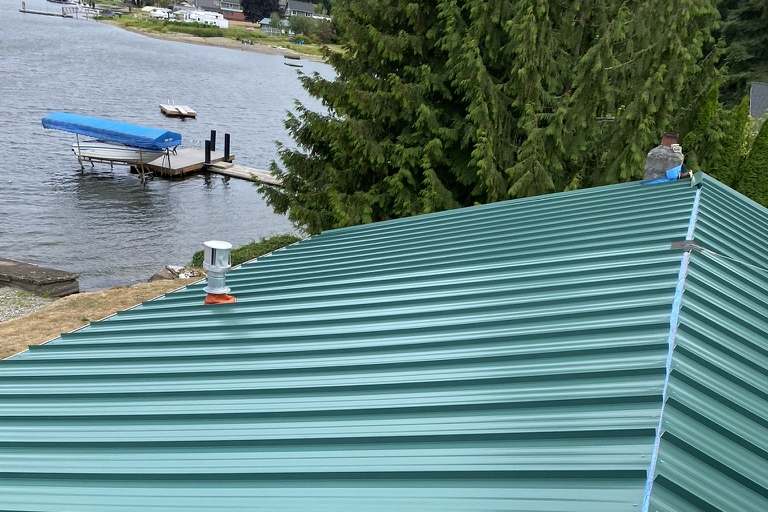 See it on a real jobIce Dam Problem Solved with Standing-Seam MetalSpokane, WA · A lake home in the Spokane area grew three-foot icicles every January and had ceiling staining in two rooms. Two previous contractors had quoted shingle replacements — treating the symptom, not the attic heat loss driving it.